


Technology explained: origin authentication
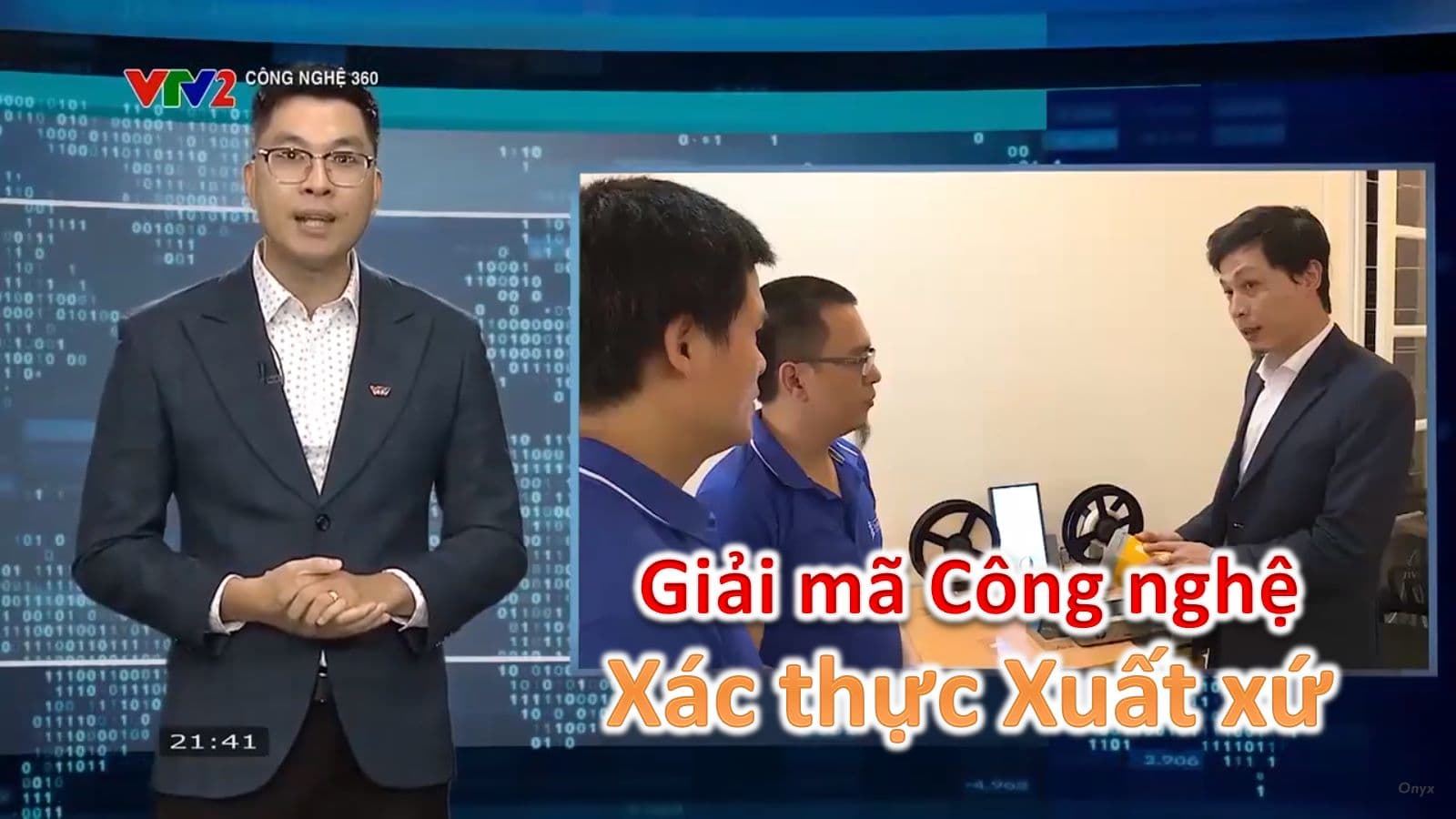
Counterfeit, imitation and substandard goods are among society's most pressing problems. The damage is real: they harm consumers' health and finances, weaken consumer confidence in the transparency of the market, and undermine the reputation of honest manufacturers. What is the state of counterfeiting on the market today? The following report looks into it. <Presenter Bảo Phong>
Counterfeit and imitation goods are widespread, and the methods of forgery ever more sophisticated, which has pushed businesses and the authorities to apply many new technologies against them. According to the Vietnam Anti-Counterfeiting Centre, counterfeiting remains a constant worry for Vietnamese businesses; as forgery has grown more sophisticated there have been many cases where the fake product carried a faked anti-counterfeit seal as well. Many businesses have suffered heavy losses in revenue and in brand reputation because their products were counterfeited. <narration>
|
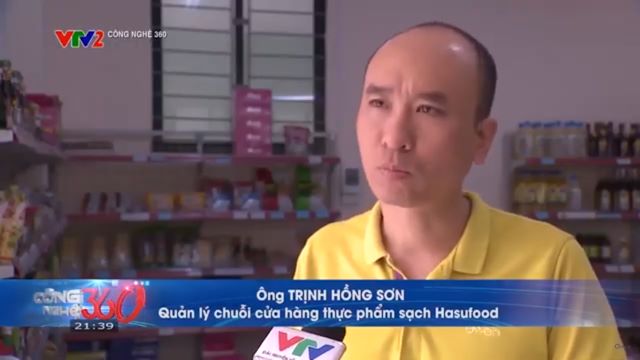
1:00 interview: Mr Trịnh Hồng Sơn, Hasufood clean food store chain |
 |
In an economy opening up as ours is, letting smuggled, counterfeit, imitation and substandard goods mix in does not merely cost the state budget revenue; it also worsens the investment and business environment and seriously affects the growth of domestic companies. <narration>
|
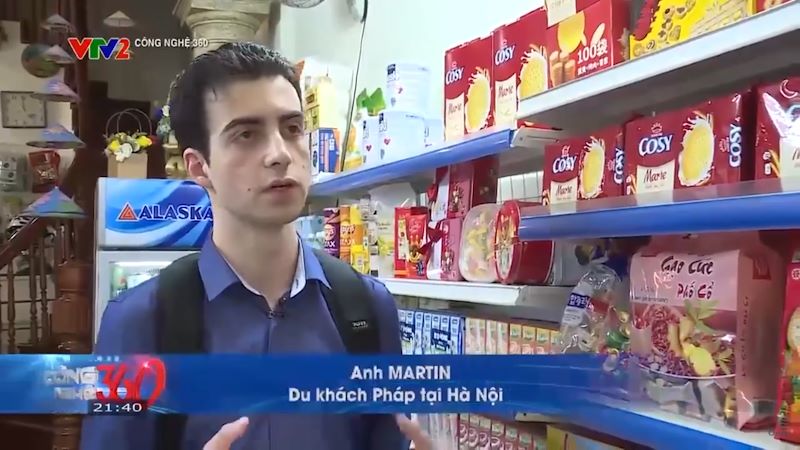
1:30 interview: Martin, a visitor from France |
 |
|
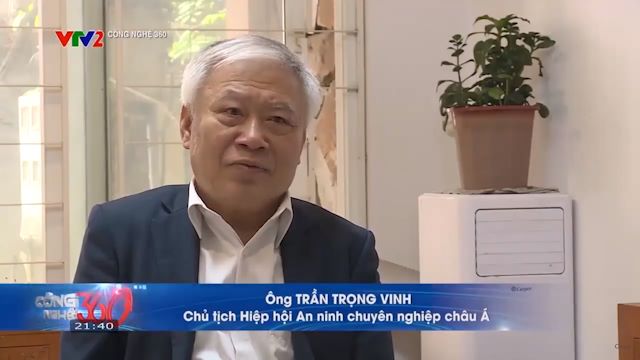
2:11 interview: Mr Trần Trọng Vinh, Chairman of the Asian Professional Security Association |
 |
According to experts, although Vietnam has introduced many penalties for trading in counterfeit and imitation goods, they are still not enough to deter those who make them. Choosing effective anti-counterfeiting solutions therefore remains a top priority for businesses. At present, applying advanced technology to create such solutions is regarded as one of the most effective measures available. <narration>
By combining a blockchain system that stores the traceable history of events with chip seal technology — a blockchain chip seal, in short — a group of authors in Hanoi has produced an anti-counterfeit seal carrying a code that changes continuously. It is called TrueOrigin. The following report looks at it in detail. <Presenter Bảo Phong>
With counterfeits widespread, a number of new technology solutions have appeared on the market recently: digital anti-counterfeiting, or the use of artificial intelligence and blockchain. One such solution attaches an RFID chip and works on the principle of collecting and protecting data. Data on origin, provenance and the product's journey through circulation is collected automatically along the way and protected by the TrueOrigin solution's data-encryption technology, whose core is the iSeal identity technology. <narration>
|
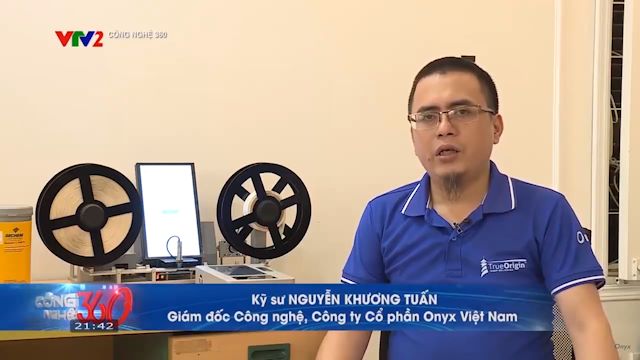
The digital signature inside the seal changes and is written back into the seal. Unlike ordinary anti-counterfeit seals, whose stored information is fixed and static — and being static, can be copied — our seal contains a memory chip connected to the blockchain system through a smartphone. Every time a user checks the seal, a digital signature is generated by the blockchain authentication council and written back onto the seal, which defeats copying: the system detects a copy at once. That is the difference in principle, and it opens a new world in this field. |
 |
The technology combines blockchain with an NFC chip into a blockchain chip seal that cannot be forged. Whatever it is attached to, it gives that thing an identity, pairing it one to one between the physical world and the digital one. Within the digital space of mathematical logic, telling right from wrong and genuine from fake is settled; the great challenge is pairing the physical world one to one with the digital one.
|
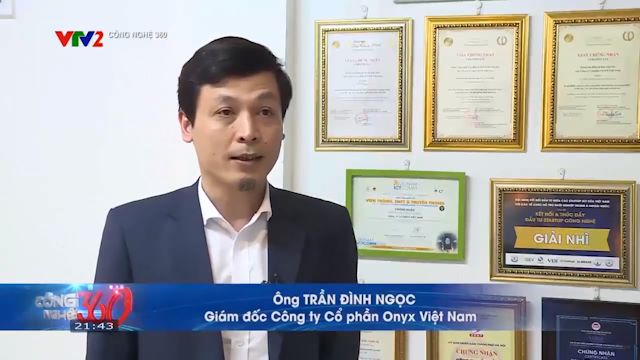
Why does TrueOrigin's origin solution solve the counterfeiting problem completely? Because it starts from the nature of the origin system itself, and the technological breakthrough comes from the principle on which the system works. That is what solves counterfeiting completely for a product. |
 |
Experts agree that as technology advances, bringing it to bear against counterfeiting is urgent. But for that fight to be effective, the agencies concerned and consumers themselves still need to work closely together, so that counterfeiting stops being a constant worry for Vietnamese businesses.
This anti-counterfeit seal and its companion app both work on the common mobile operating systems, so users can reach the free app easily. With only a smartphone, users can verify a product with regulators and manufacturers through the blockchain, and all authenticated product details appear on the screen in less than a second.
Here is an inventive product: pictures that decorate a room and also remove odours and kill bacteria thanks to a nano coating on their surface. Facing the appearance of counterfeits on the market, this company has applied origin authentication to its products, with an anti-counterfeit seal built on blockchain — the seal carrying a continuously changing code, called TrueOrigin.
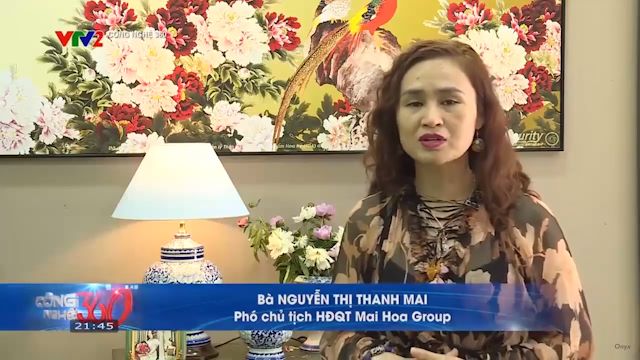 |
Compared with the earlier solution, a QR code can be forged. With TrueOrigin it cannot, because every scan changes the digital signature and that signature is unique. That is why it cannot be forged. I find this solution works well for customers: it is easy to use, and they learn where our product came from in more detail. |
|
As someone who likes distinctive, inventive products, I always want to find and use products of good quality with a clear origin. The TrueOrigin anti-counterfeiting app gives me the information I look for and lets me use the product with more confidence. It also provides details of the blockchain chip seal, whose digital signature changes continuously and is written back onto the seal after every event. |
 |
|
8:30 interview: Mr Nguyễn Minh Vỹ, Vietnam Anti-Counterfeiting Association |
 |
|
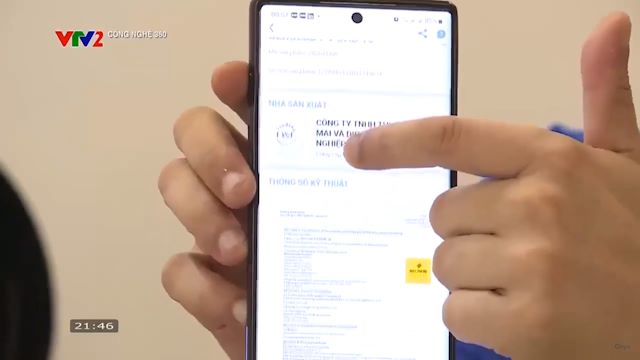
This solution can automatically detect a copied seal on an ordinary handset without needing an expert, so anyone, with or without technical knowledge, can check easily. In my hand is the checking app for end users on a mobile phone; anyone can use it to tell genuine from fake. You then see the authenticated information — whether the item is genuine or fake — along with everything about the product, from its story to its specifications and the manufacturer's commitments, and you can follow where the product has been. |
 |
In practice, applying digital transformation to anti-counterfeiting is an important step for a business to upgrade its protection, defend its brand and drive out counterfeit and substandard goods. Through anti-counterfeiting tools and digital platforms synchronised with a company's own data, businesses can keep track of goods circulating on the market: tracing a product's route, checking sales information, spotting forgeries quickly, and having the evidence to act on when something goes wrong. Vietnamese technology products, meanwhile, gain a chance to reach an international level.
Meeting the criteria of novelty, feasibility and inventiveness, this identity seal has been filed for patent in Vietnam and abroad. We hope that in the period ahead, blockchain in anti-counterfeiting technology will help businesses raise sales and reduce lost revenue; and that the e-commerce market will keep growing as consumers who order online take the initiative in checking what they have bought.
That brings today's Technology 360 to a close.
Thank you for watching.
Goodbye, and we will see you again in the next programme.
Watch the original on VTV: https://vtv.vn/video/cong-nghe-360-2023-so-24-649244.htm