


eFence: high-security electronic perimeter fence
INTRODUCTION
We are pleased to introduce eFence, a high-technology electronic fence built on the strongest security foundations available today.
Consumer anti-theft fences on the market use infrared beam technology without any protection against technically skilled intruders, and are easy to defeat by simple means. eFence stands apart because it removes that weakness entirely, and it adds a number of other capabilities.
Applications:
- Perimeter fencing and intrusion alarms for sites with a large perimeter that a guard force cannot watch completely and continuously, such as:
- Factories, plants and industrial parks;
- Organisations with high security requirements;
- Warehouses and depots that need protection
- Perimeter fencing and intrusion alarms for private homes
FEATURES
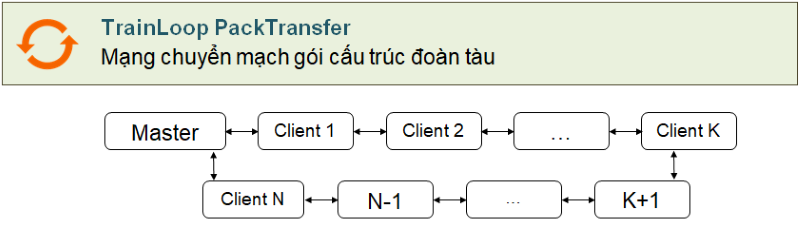
The communication link between posts provides:
- Automatic addressing of posts: addressed posts allow the fence to grow to tens of thousands of posts — thousands of kilometres of fence;
- A TrainLoop network topology: a cable break between any two posts is detected and reported to the user, while the rest of the system keeps working normally;
- Any post that loses power or communication is detected and reported to the user, while the rest of the system keeps working normally;
- Operating status, intrusion warnings and alarms are updated continuously;
- Packets on the link are encrypted; the system uses the encryption algorithm the United States government selected as its standard for classified documents in 2004

- The infrared beams use coded-pulse technology, which brings several advantages
- Immunity to white noise: unaffected by hot, bright weather
- PWM: optimises transmit power while saving energy;
- Posts exchange encrypted data over the coded pulse beams. The code uses a one-way cryptographic algorithm that cannot be predicted in advance.
This defeats intrusion equipment that eavesdrops to record code sequences and replays forged pulses to break in;

- With a detection window of 5.5 ms, it can detect:
- A 5 cm object crossing at 30 km/h;
- A 1.5 m drone flying at close to the speed of sound, around 900 km/h;
- An intelligent recognition algorithm allows it to identify and warn:
- Four objects at once;
- It detects interference, measures it and records it without raising an alarm.
For example: leaves moving in the wind, dust, background sunlight;
- A warning for small objects. For example: small animals or small objects flying past;
- An intrusion alarm. For example: a large animal or a person crossing the fence;
- An electronic intrusion alarm. For example: an attacker probing the fence electronically;
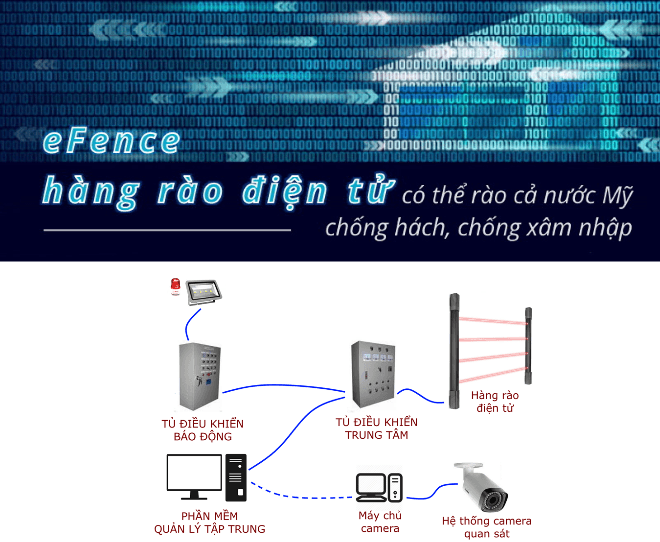
- Warnings and alarms sent to the control centre;
Warnings raised on the light and siren on the post;
Interlock: warnings and alarms are passed to other systems (access control, cameras)

- Each infrared sensor post carries 8 beams (or 16 or 32, depending on the size chosen)
- Each post can transmit and receive beams in two directions, left and right; each post is addressed, forming a continuous chain of fence that can protect a very large area.
- Infrared pulses are transmitted through optics with a range of up to 100 m (and further in future versions);
The beams also penetrate dust and harsh weather: heavy rain, drizzle, snow, fog and strong sun.

The fence is protected by the CryptoDefense algorithm, which brings together the most advanced cryptography available today. CryptoDefense cannot be broken by cryptographic attack, not even by today's most powerful supercomputers or by distributed cracking across the Internet of Things
Every attack on the fence must attack the CypherKey. Not even we can break into the product we build ourselves.